TechnologyFeature
Inside the tiny shops keeping your old phone alive
Independent repair counters are busier than they've been in a decade. Their owners say the hardest part isn't the soldering. It's getting the parts.

By Maya Okafor
· 2 min read
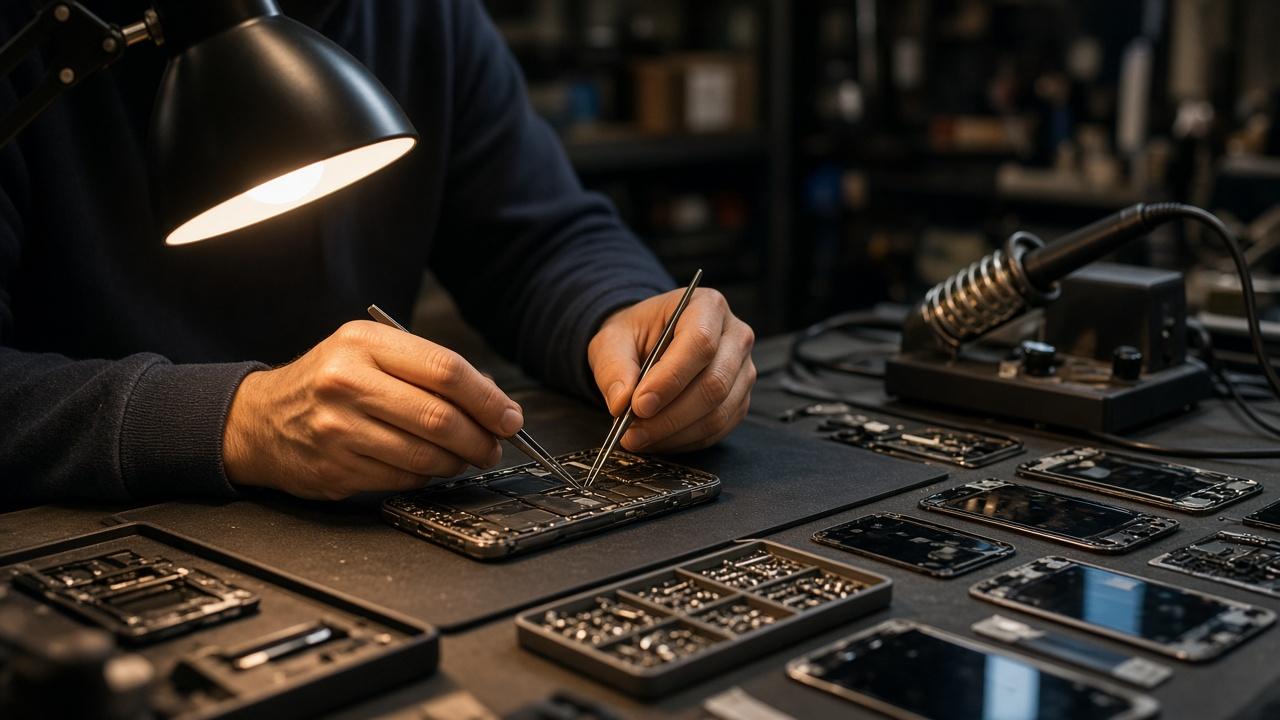
The shop is eight feet wide. There’s a counter, a magnifying lamp, a heat gun, and a wall of tiny labeled drawers. On a Saturday afternoon, there’s also a line out the door.
“People used to come in once their phone was dead,” says Tomás Ferreira, who has run the counter for eleven years. “Now they come in while it still works. They want it to last.”
The repair boom
Small repair shops are having a moment. Phones cost more than they used to, and people are keeping them longer. Customers who would once have upgraded every two years now ask for a new battery and a fresh screen instead. Ferreira says his battery replacements have roughly doubled since 2023.
He’s not alone. Across a dozen shops Blakey visited in three cities, owners described the same pattern: more customers, older devices, and a different kind of request. People don’t just want their phone fixed. They want to know how long it will keep going.
The parts problem
The hard part isn’t the work. Ferreira can swap a screen in twenty minutes. The hard part is finding the screen.
Many modern phone parts are paired to the device at the factory. Swap in a replacement, even a genuine one pulled from another phone, and the phone may show a warning, disable a feature, or refuse to calibrate. Some manufacturers sell parts directly, but the process can require registering the repair and waiting days for approval.
“I can fix it in twenty minutes. Then I wait a week for permission.”
Shops have adapted. Some stockpile parts from broken phones. Others specialize in older models that predate the pairing. A few have stopped doing certain repairs entirely.
A different relationship
What strikes you, spending a day at the counter, is how personal it is. A teenager brings in a phone with a cracked camera lens that holds photos of her late grandmother. A delivery driver needs his charging port fixed before his evening shift. A retiree wants to know whether his eight-year-old phone is worth saving. (Ferreira tells him honestly: probably not.)
At closing time, there are still three phones on the bench, each tagged with a name and a phone number. “Tomorrow,” Ferreira says, flicking off the lamp. “They always come back for them.”
- repair
- phones
- small business